Wednesday, January 31, 2024

After watching a fascinating Zoom session on Sephardic cultureI was inspired to dig deeper into Sephardic music and dance – and to bring back several dances to Sephardic music including La Rosa Enfloresce (the Sephardic language version of the Israeli dance Hashoshanah Porachat). As far as I know, the only dance in the repertoire that appears to be traditional is Alta es Luna; it was introduced as such by Eric Bendix.

The language of Sephardic Jews was Ladino, a romance language that originated in Spain and was preserved by the descendants of Spanish Jews who were expelled from Spain after 1492. It’s a very archaic form of Castilian Spanish, mixed with Hebrew, Aramaic, Arabic, Turkish, Greek French, Bulgarian and ItalianLadino preserves many words and grammatical usages that have been lost in modern Spanish. It was originally written in versions of Hebrew script, but these days it is written with the Latin alphabet. 

In the videos I watched online, only the women dance, no one is holding hands or leading, and it resembles basic belly dancing. The women (called Tanyaderas) led song and dance life-cycle celebrations, especially for the many events that were part of weddings. A frame drum was used to accompany their singing. Medieval texts and images suggest that Jewish women’s song-dance leadership was normative in Mediterranean Jewish communities.


In Sephardic communities such as those in Turkey, the Balkans, Bosnia, and Morocco, Tanyaderas were invited to sing and drum at all the life-cycle ceremonies – most particularly at weddings - where they often conducted the ceremonies and supervised the details. Note that Miriam, the older sister of Moses, wrote the Song of Miriam and led the Israelites in dance and song at the shore of the Red Sea. Jeremiah proclaimed "you will take up your timbrels and go out to dance with the joyful."  And I have always loved this phrase from Ecclesiastes – “a time to weep and a time to laugh, a time to mourn and a time to dance." 


Illuminated medieval Spanish Haggadot (the prayer books read by Jews for the holiday of Passover) all included a section of images of women dancing. Depictions of Miriam and women celebrating at the shores of the Red Sea appear in the Sarejevo Haggadah in the fourteenth century. In Sephardic communities in Turkey, the Balkans, and Morocco, Tanyaderas were invited to sing and drum at all the life-cycle ceremonies, where they often conducted the ceremonies and supervised the details.

Sephardic communities had many unique wedding customs. Tanyaderas led these events through their distinctive songs and dances, as they helped the community fulfill Jewish requirements for rejoicing at a Jewish wedding. This included the ritual bath the evening before the bride was to be married. Afterwards, the women, sang, danced, ate sweets, and drank strong liquor. Tanyaderas in Morocco also led singing and dancing at a henna party that involved painting the hands and feet of the bride-to-be.

Today there are still Sephardic communities in Israel and Morocco that employ the Tanyaderas for life-cycle celebrations in Jewish communities. Music and dance continue to play a compelling role in Jewish Mediterranean cultures, and women’s leadership outside of the synagogue held great importance for the Sephardim.

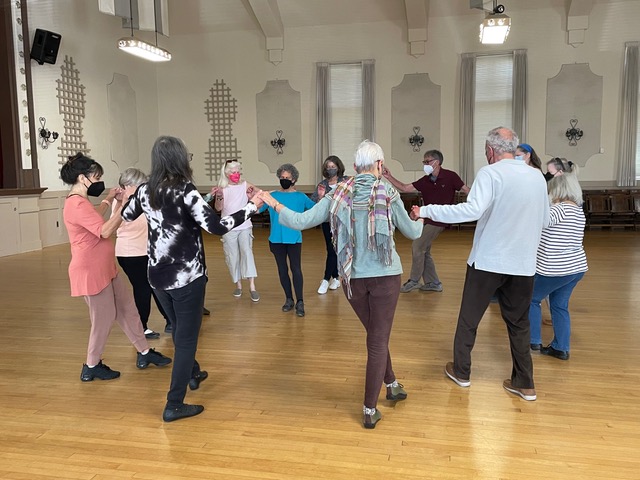
Please do join us in Petaluma on Monday nights 7-9 p.m. at Herman Sons Hall in Petaluma and enjoy our wide repertoire of international folk dances. For more information, contact me at cjay@horizoncable.com.

Friday, December 22, 2023

 Monday night dancing at Hermann Sons Hall in Petaluma starts up again 7-9 p.m. after the new year on January 8 and runs through May 20 (no class on April 9).  Newcomers and beginners are always welcome – first class is free, and the first half hour focuses on easy, fun, beginner dances from Bulgaria, Romania, France, Serbia, Ukraine, Israel, Greece and more.


We are looking forward to dancing again with live music from Da Mozehm in February. As well, we are excited that Jaap Leegwater will be returning to Petaluma on Monday, April 24.  


Our winter/spring session runs from January 8 to May 20. Newcomers and visitors are always welcome; for more information, contact me at 415-663-9512 or cjay@horizoncable.com

Thursday, October 19, 2023

We had a wonderful time dancing to fabulous music by Bulgarika on Monday night, 0ctober 23! 

Five master musicians, all steeped in Bulgarian Music and rhythms make up the band: Nikolay Kolev (gadulka), Dona Kolev (vocals), Temelko Ivanov (naval), Nikolay Kodzhabashev (tambulfa), and Marin Chalamov (tapan).


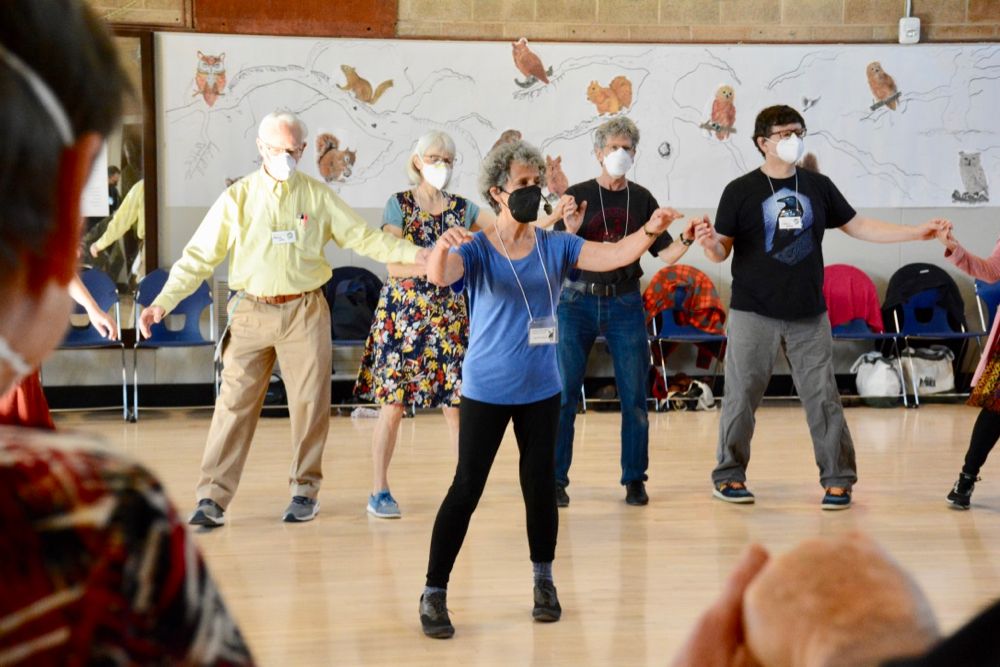
At the same time, all of us are mourning the passing of Paul Smith, who was a mainstay of our dance group for decades. He was an elegant, understated dancer, a lovely man, and a dear friend. I am picturing him now, leading some of his favorite dances including Melnik and Joe Batreanesc. Paul is the one in the middle in the photograph; fairly sure he is dancing Bavno Oro. He will be deeply missed. 


Monday night dancing 7-9 p.m. at Herman Sons Hall, 860 Western, Petaluma,  continues through December 18.  Newcomers and beginners are always welcome. For more information, contact Carol Friedman at 415-663-951.

Wednesday, February 15, 2023

Massive storms, flooding, and power outages delayed the start of my classes that had been scheduled to begin again the week of January 9. This included three days without power or Wi-Fi, significant flooding, plus periodic power outages and downed trees blocking the roads throughout the rest of the week. A huge Monterey Cypress tree branch fell on my property - luckily it just missed my garage. 

I’m glad to report that the Balkan/International class on Mondays 7-9 p.m. and the Israeli folk dance classes on Thursdays 1:15-3:15 p.m. were able to resume the third week in January. Both classes will now be held at Herman Son’s Hall, 860 Western Avenue, in Petaluma. As always, we’ll be doing a mix of beginning, intermediate and advanced dances – and requests are always welcome. It’s always fun and interesting to see what folks come up with; recent requests on Monday have included Bannielou Lamboal (France), Cetvorno Horo (Bulgaria), and Joc in Patru (Romania). On Thursdays, we've been reviewing Lev Patuach, Harmonica, and Shav Al Admati.


 I’m also continuing to introduce dances that I have choreographed, including one to beautiful Ukrainian music by Kitka (
Oj, jak ze bulo) and a lovely simple dance Kenyan music (Kothbiro).

And a heads up that the wonderful vocal ensemble Kitka will be performing in my neck of the woods on Saturday, May 20, at the Dance Palace Community Center in Point Reyes Station – be sure to mark your calendars for this special event.

I continue to teach one Balkan/International Zoom class, noting that it is now scheduled for the second Wednesday of each month from 7-8:15 p.m. 

Newcomers and visitors are always welcome to join any of these classes; for more information, contact me at 415-663-9512 or cjay@horizoncable.com

Monday, January 2, 2023

Balkan and Israeli folk dance classes will be starting up again in the first week of January 2023, and both classes will now be held at Herman Sons Hall, 860 Western, Petaluma.

Balkan/International class will be on Mondays 7-9 p.m. First session is January 9-April 24; second session runs from May 1-July 13 (no classes on May 29 or July 3). Requests are always welcome. We'll continue to review and dance Stamena (Bulgaria) and Hora Anton Pann (Romania), and I'll also be introducing two new dances I have choreographed done to music from Ukraine.

Israeli folk dancing will start on January 12 and run through March 8; second session will be March 1-April 27. The first hour of this class is beginning/intermediate dancing; second hour will be intermediate and advanced dances, with lots of time for requests. I'll be teaching a (new to me) Avak Hadrachim, a lovely waltz as well as introducing a dance I choreographed to a wild and fun version of Adon Olam.

Beginners, newcomers and drop-ins are always welcome. Please feel free to contact me for more information at cjay@horizoncable.com.


Tuesday, November 8, 2022

                                                     Fun time dancing at the Officers' Ball!


Balkan/International folk dancing continues Herman Son's Hall in Petaluma on Mondays, 7-9 p.m. through December 12 (note: no class on December 5). Current favorites include Kune, Brestacka Racenica, and Nyandolo.

Israeli folk dancing at Marin JCC on Thursdays 1:30-3:30 p.m. runs through December 6. We've been learning Or Veyershalyim, and resurrecting some oldies including Hora Or and David Melech Yisroel. Note that as on January, this class will be moving to Herman Son's Hall (same day, same time.

Wishing you all a happy healthy holiday season, with lots of friends, food, celebration and dancing!

Friday, October 21, 2022

2022 Officers Ball Syllabus

I'm pleased and excited to be a guest teacher again at the 2022 Officers' Ball on Saturday, October 22, 1-10 p.m. I'll be teaching Cicovata (Bulgaria) and introducing Nyandolo (a lovely easy dance to music from Kenya).

Here are the dance notes for you:

Cicovata

 https://www.youtube.com/watch?v=_Du0stocXWw

Bulgaria 


This dance is a multifigure variation on the dance Cicovoto (or Cicovo), apparently from the Vidin area of North Bulgaria. It was taught by Steve Kotansky based on how the Bulgarian community in the St. Louis Area did the dance. Other versions have been taught by Yves Moreau, Yulian Yordanov and Iliana Bozhanova. I have chosen three variations to teach that I like (there are many others).


To R, Facing C, Arms W, 12-count phrases


Basic: 

1-6: Step R to R, XLB, R, XLF, R, XLB (6-step grapevine)

7-8: Step R to R, tch L

9-12: To L: Step L, together R, step L, tch R


Variation #1 – Lift step

1-6: Step R to R, XLB, R, XLF, R, XLB (6-step grapevine)

7-8: Lift R circling to step LB

9-12: To L: Step L, XRF, step L, tch R


Variation #2 – Back & Front

1-4 Step R to R, XLB, R, XLF

4-12: Step RF, L in place, RB, L in place; repeat all


Variation #3 – Around the world

1-4: Step R to R, XLB, R, XLF

5-8: Lift XRF to L, step R, step LB, step RB

9-12: Lift step XLB, step R, step L


Nyandolo

 https://www.youtube.com/watch?v=DwopjqGMH88

Kenya 

Taught by France Borque-Moreau, who learned it from Michel Hepp in Germany. The song is sung in the Kisa language by Ayub Ogada.


4/4 rhythm

Arms: V

Closed circle

Intro: 8 bars; start with singing


Face C, to R:

Sway R to R

Sway L to L

Sway R to R

Close L next to R


Questions or more information:

Carol Friedman: cjay@horizoncable.com

415-663-9512


Tuesday, August 16, 2022

Workshop with Jaap Leegwater

 We had a fabulous time dancing with Bulgarian dance teacher Jaap Leegwater in Petaluma on August 8!  He taught Sapil Dobri and Staro Erkecko, danced Mari Mariko with us, and thrilled us by playing his flute for Melnik.


Looking forward to dancing with you all again at Hermann Son's Hall, 860 Western Avenue, Petaluma, on Mondays 7-9 p.m. starting August 12. Israeli folk dancing at the Osher JCC in San Rafael on Thursdays 1:30-3:30 p.m. will resume on September 8.

Sunday, July 31, 2022

We are thrilled and excited to host a special workshop with Jaap Leegwater at Hermann Son’s Hall in Petaluma on August 8. Jaap is a folk dance legend; he introduced so many Balkan dance classics -  including Karamfil, Sedi Donka, Melnik, and Vlasko Horo. We plan to add more to our repertoire after the workshop.

The fall session of Balkan/International dancing at Hermann Son’s Hall in Petaluma on will start up on Mondays, September 12 from 7-9 p.m. and continue through November 28. Newcomers and beginners are always welcome. Note that we are continuing to wear masks for safety, by mutual consent, and require proof of vaccination.

Israeli folk dance classes at the Osher Marin Jewish Community Center in San Rafael are scheduled for Thursdays 1:30-3:30 p.m. from September 8-October 13, and October 27-December 8.  Folks can sign up through the JCC website for a 6-week series, or drop-in when it fits into your schedule. Latest favorites include Ya Raya, Hora Simchat, and Lakum Vel’Amod. In this class as well, we are wearing masks.

I am also having fun choreographing my own dances, and introducing them in my classes. So far, I have created Oiydo mi Novya, a beautiful Sephardic song from Spain, as well as the classic Yiddish workers' solidarity song Ale Brider (using a fabulous version featuring Itzak Perlman with the Klezmatics). More to come...stay tuned!

For those of you who still prefer the safety of Zoom, as well as folks who live too far away to attend my in-person classes, I teach one Balkan/International Zoom class on the third Wednesday of each month from 7-8:15 p.m. 


I invite any of you who are looking for more opportunities to dance (whether it be virtual or in person) to contact me at 415-663-9512 or cjay@horizoncable.com.

Monday, May 23, 2022

Summer Dancing 2022

The summer session of Balkan/International dancing at Hermann Son’s Hall in Petaluma on Mondays 7-9 p.m. runs from June 6 to July 25 (no classes on June 20 and July 4). Summer dancing is free-flowing, with lots of requests, along with periodic teaching and reviews when requested. We'll definitely be dancing a few new favorites including Vallja Hayde Merre Furken, Usti Baba, Sofka, and Fado Portugues. We are continuing to wear masks for safety, by mutual consent.

Summer Israeli folk dance classes at the Osher Marin JCC in San Rafael on Thursdays 1:30-3:30 p.m. are scheduled for June 30 to August 6. Folks can sign up through the JCC website for a 6-week series, or drop-in when it fits into your schedule. Latest favorites include Rokdim Yechefim and Nitzmadnu.

And for those of you who still prefer the safety of Zoom as well as folks who live too far away to attend my in-person classes, I teach one Balkan/International Zoom class on the third Wednesday of each month from 7-8:15 p.m. 


I invite any of you who are looking for more opportunities to dance (whether it be virtual or in person) to contact me at 415-663-9512 or cjay@horizoncable.com.

Friday, February 25, 2022

Returning to Dancing in Person

I’m loving holding hands in a circle again. I’m loving dancing with other people again. I’m loving having room to move again. And I’m loving introducing new dances I learned during the pandemic.

I continue to be grateful for Zoom. It was a big leap for me (I hate new technology), but with the help of some knowledgeable and generous dance friends, I did it. It was different. When I taught or reviewed a dance, I couldn’t see people. I had to have my back turned from the screen, so folks could distinguish left from right. I had to dance far enough away from the screen so people could see my feet. It was much harder to balance without holding hands. And it was also much harder to remember dances without that connection, because you feel the dance as much as know it. I had to keep everyone muted so the music works, which meant there was much less easy, casual conversation.


But I got to see and teach and dance regularly with my wide circle of dance friends.I had big fun discovering new dances (and re-discovering old ones) through the wide variety of virtual folk dance classes and parties that are happening. I am grateful for that as well, and I continue to participate in Zoom classes and parties regularly.


But I’ve really come back home to dancing, and it feels good.


I was honored to be the guest teacher at the Festival of the Oaks in February. This was my first big in-person dance event in more than two years and it was so much fun. I taught five favorites from the year: Alta es la Luna (Sephardic/Greek), Valle Came e Shpeft (Albania), Jerusalema (South Africa), Maleshevsko Horo (Bulgaria) and Vallejo e Dados (Albania).


My Petaluma Balkan/International classes are back on Mondays 7-9 p.m. through May 15 at Hermann Sons Hall in Petaluma.. And Israeli dancing is happening as well at Osher Marin JCC in San Rafael; folks can sign up for 6-week sessions through the JCC.


Only one Zoom session left, and I’m planning to continue doing this because it’s been so much fun connecting with dance friends who live too far away to take my in-person person classes. This Balkan/International Zoom class is scheduled for the third Wednesday of each month from 7-8:15 p.m. 


Hope to see you on the dance floor!


Wednesday, December 16, 2020

Sandy's Cacak & more - virtually

We’re still dancing virtually in the North Bay – with Israeli class on Sunday mornings and Balkan/International on Monday nights. Both classes will continue through late December, and then start up again in early January.

In the Balkan class, we brought back Sandy’s Cacak, an old favorite that had dropped out of our repertoire. I have a vivid memory of longtime Petaluma folk dance stalwart Sandy Clemmer leading this dance, always wearing his opincas. In Serbia it's simply referred to as "Cacak Kolo; Sandy introduced the dance locally, hence the name. And we’ve been taking a fun deep dive into Albanian dances, some of them traditional (Valle Iusuf, Vallja e Katushkes, Populli Jon)l, others choreographed, including Valle e Permetit and Moj Maro. I also introduced great new music for Valle Pogonishte with vocals by well-know Albanian singer Merita Spahiu.


In the Israeli class, we’ve been having fun dancing favorite line dances including Hine Ma Tov #2, Vals Agur Zahav (originally done as a couple dance, but I found a video from Japan of folks doing it as a line dance), Sixteen Tons, (music by Tennessee Ernie Ford – a testament to the fact that Israelis will choreograph to any music), Jaimale, Pata Pata, Homey Twist (not Israeli, but a favorite Urban Soul line dance), and – of course – Jerusalema.


I invite any of you who are looking for more opportunities to dance to contact me at 415-663-9512 or cjay@horizoncable.comif you’d like to join us.

Monday, October 12, 2020

The Virtual Dance Beat Goes On

 We’re still dancing virtually in the North Bay, certainly through the end of this year, and likely beyond. And we’re still having fun. I’m teaching Israeli on Sunday mornings, and Balkan/International on Monday nights.


My latest new favorite dance is Furla, a lively contemporary Bulgarian dance introduced by Gergana Panova. I saw this at one of the Peninsula Folk Dance Parties.I also stumbled on an interesting version of Sa Cocek– this one is from Albania and is called Sa Gjijile (also spelled Xhinxhile). It has a similar structure (10-counts), but a subtly different pattern and geography.


By request, I did a virtual Balkan session with a focus on Pontic dances, I’m digging into my own repertoire and also looking at videos online. We danced Dipat and Samson, both Greek dances that I originally learned when I participated in Yannis Constantinou’s annual folk dance seminar in Prespa. I also included included Tamzara (Armenia), Tik (Greece), Urdu (Turkey), and Omal Kars (Greece).


In my Israeli class, I’ve been bringing back old favorite line dances including Zodiak and Naomi,plus some top hits from the Gadi Bitton repertoire (Salamati, Ya Raya, and Or Chadash).


I invite any of you who are looking for more opportunities to dance to contact me at 415-663-9512 or cjay@horizoncable.comif you’d like to join us.

Friday, July 3, 2020

Going Virtual

It was like going through the stages of grief, not being able to teach and dance together with all of my folk dance buddies when the virus hit along with shelter in place orders. I’ve been teaching three classes a week for years now; it’s part of my weekly rhythm, my friendship circle, my exercise, my fun, my way of feeling connected and happy and at peace with the world.

I still miss holding hands in a circle, and look forward to the time when we can do that again. But I’m pretty sure that time is far in the future.

So I have made the leap to go virtual. I am now teaching two weekly class via Zoom – Balkan and Israeli. It was a big leap for me (I hate new technology), but with the help of some knowledgeable and generous dance friends, I did it.

And I have discovered that I’m really loving it.

It’s different. When I teach or review a dance, I have to turn my back from the screen, so folks can distinguish left from right. I have dance far enough away from the screen so people can see my feet. It’s much harder to balance without holding hands. And it is also much harder to remember dances without that connection. You have to keep everyone muted so the music works, which means there’s much less easy casual conversation.

And – I am once again dancing regularly with my wide circle of dance friends. We chat first, just checking in, as we always did in my previous classes. I get to dance the dances I love. I get to teach again, which is one of my greatest pleasures. I’m having fun discovering new dances (and re-discovering old ones) through the wide variety of virtual folk dance classes and parties that are happening. I've come back home to dancing, and it feels good.

Wednesday, May 27, 2020

Reflections on Israeli Music & Dance: Hine Ma Tov

Many Israeli dances are done to songs with lyrics taken directly from the Bible and Jewish liturgy. One of the most well known is Hine Ma Tov; the words are from Psalm 13 and translate to "How good it is for brothers to live together in peace and harmony." This song is sung regularly at Shabbat and High Holiday services.

The first dance version was choreographed in 1950 by Israeli dance pioneer and choreographer Rivka Sturman, using an Ashkenazic melody. It’s a simple two-part dance, done holding hands in a circle:

The other common melody is Chassidic, and is often sung as a round. It was popularized when it was included in the classic songbook Rise Up Singing. Here’s a version from Abayuda of Uganda:
And here’s a beautiful rendition by Harry Belafonte:

In 1999 a new version, commonly dubbed Hine Ma Tov 2, became the hit of the Israeli folk dance scene. The song is performed by the Miami Boys Choir, with music composed by Moshe Jacobson and dance choreography by Silvio Belfen. 

It’s interesting to note the profound difference between Sturman’s simple two-part dance and the newer line dance version, which mirrors the increasing complexity of life in Israel (and the world) over time.

Hine Ma Tov 2 created a flash mob dance craze around the world.
This one’s from Spain:
And my absolute favorite:
This one ditches the choreography - but you just have to love these construction workers!

Tuesday, May 19, 2020

Reflections on Israeli music & dance: Hora & Hava Nagila

Hora & Hava Nagila

Most Americans think of the hora (and the popular song Hava Nagila) when they hear the term “Israeli dance.” The irresistible rhythm and joyful melody have made this song one of the most popular party dance tunes in the United States. It is pretty much required for any bar mitzvah or wedding. 

Here, the hora is danced moving to the right (counter-clockwise), but in Israel, it moves to the left, as you can see in this video: 

By contrast, here’s a Yiddish/Klezmer version of the hora, with very different music and footwork:  https://www.youtube.com/watch?v=_gCaasGjtR0

The song Hava Nagila, which means “Let Us Rejoice,” has been covered by an astounding variety of musicians, including Glen Campbell, Lena Horne, Chubby Checker, Connie Francis, surf guitarist Dick Dale, and the Barry Sisters. Singer Harry Belafonte recorded it in 1959; it became one of his most popular songs, and he rarely gave a concert without singing it. 

Check out these versions of the song:
Serbian brass band master Boban Markovic: 
Take your pick, or dance to them all as you shelter in place.

Monday, May 11, 2020

Reflections on Israeli Dance: Choreographer Rivka Sturman

If you have ever gone to a Bar/Bat Mitzvah or a Jewish wedding or a Jewish camp, you have probably done the classic Israeli folk dance Zemer Atik. Also known as Nigun Atik, the title means “ancient song.” It’s easy, fun, and has great music. 

Zener Atik was choreographed in 1955 by Israeli folk dance icon Rivka Sturman. Sturman was an early pioneer of Israeli folk dancing, an invented tradition originating in the 1940s as part of a deliberate and focused campaign to create a cultural tradition for the newly created state. These dances were intended to unify Israel as well as facilitate a sense of national identity. Her dances include Dodi LiHarmonicaHashualHora ChassiditHineh Ma Tov, and Kuma Echa.

Here are video links for her ever-popular Zemer Atik and Mayim so you can watch – and hopefully dance along! 

Zemer Atik:

Mayim:
https://www.youtube.com/watch?v=nsY3WWlK46A

Wednesday, April 15, 2020

Virtual Dancing: Our New Normal

Virtual folk dance classes, virtual folk dance parties, watching videos and dancing along -- this continues to be our new normal right now - and it looks likes it may last much longer than we every expected.

This means all of folk dance devotees need to keep dancing alive in our own homes and living rooms as best as possible. I continue to stay in contact with all of my students, checking in to see how they are holding up, and sending three videos a week (Israeli dances for my Israeli class, international/Balkan for my other classes) out each week for folks to dance by themselves, in whatever room is available.


Here are a few recent links that I have been sharing:


Sweet Girl (Armenia/U.S.): https://www.youtube.com/watch?v=piSysDxXHPU&t=15s
Zonradikos (Greece): https://www.youtube.com/watch?v=OVxvLPuVCFw
Sadi Moma (Bulgaria): https://www.youtube.com/watch?v=-tw9_PL5Y7g

Some resources to check out: the Peninsula Folk Dance Council (you can find them on Facebook) is doing virtual folk dance parties - the next one is scheduled for May 9, 3-6 p.m. And the Folk Arts Center of New England is offering Saturday morning classes - check this out at http://www.facone.org.


This too shall pass. It's going to be a long haul - but hopefully we'll all get through it with grace, a sense of humor, and hope for a better new world with lots and lots of dancing.


Friday, April 3, 2020

the New Normal: Dancing in Our Living Rooms

Virtual folk dance classes, virtual folk dance parties, watching videos and dancing along -- this is our new new normal right now.

I am staying in contact with all of my students, checking in to see how they are holding up, and sending three videos a week (Israeli dances for my Israeli class, international/Balkan for my other classes) out each week for folks to dance by themselves, in whatever room is available.

Here are a few links that I have been sharing:
Setnja (Serbia): https://www.youtube.com/watch?v=nxC1e1Q8_Cg
Bavno Oro (Macedonia): https://www.youtube.com/watch?v=VvNMluxewLk
Joc de Leagane (Romania): https://www.youtube.com/watch?v=ZNlFSrJqLoM


I have a houseful - my son, daughter-in-law and two grandkids (ages 5 and 2) are living with me right now - so I am usually dancing in a small space in my bedroom. But I'm also having fun learning new dances whenever I can.

Some resources to check out: the Peninsula Folk Dance Council (you can find them on Facebook) is doing virtual folk dance parties - the next one is scheduled for April 11, 3-6 p.m. And the Folk Arts Center of New England is offering Saturday morning classes for the next month (and perhaps more, if the shelter-in-place orders are extended - check this out at http://www.facone.org.

I miss my classes; I miss my students; I miss holding hands in a circle and dancing to all my favorite dances. But I'm dancing as best as I can, by myself, with my grandkids, and with my family. I'm grateful for all the folk dance connections I do have -- and so looking forward to being able to dance with all my folk dance friends again.

Monday, March 16, 2020

Coronavirus Crisis Hits the Folk Dance Community

So we are all social-distancing now – which means no large groups, no holding hands, and six feet between you and the next person.

I’m feeling bereft and adrift, as all of the classes I teach  - at the College of Marin, Osher Marin JCC, and Hermann Sons Hall in Petaluma – have been cancelled. Our annual spring folk dance party in Petaluma has been cancelled. Cancelling was the right thing to do, the safe thing to do, and I’m hating every minute of this.

This means no folk dancing right now, and possibly through the next several months.

Which means, for so many of us, that the activity we love is forbidden. That we won’t be seeing the long-time friends and community we cherish. That we won’t be hearing that wonderful Balkan music, joining hands together, and joyously dancing to our favorite dances.

So here’s what I’m doing to make it through these hard times:
  • Listening to my favorite music
  • Watching a lot of folk dance videos
  • Working on learning some new dances to teach once classes can be resumed
  • Dancing in my living room with my granddaughters
  • Having long phone conversations with friends
  • Taking hikes, doing yoga at home, and reading lots of books.

In these tough times, I’m doing the best I can to stay sane and healthy. I’m hoping you all will be able to do the same.